
Nearshoring Regions Redefining Global Careers in 2026
As nearshoring matures into a long-term workforce strategy, its impact varies by region, not just in scale, but in how careers are shaped, skills are developed, and professionals integrate into global teams. Latin America, APAC, and Canada each represent distinct nearshoring ecosystems, offering different advantages to candidates depending on their career aspirations, technical depth, and preferred work models. Understanding these regional dynamics is essential for professionals navigating global opportunities in 2026.
The global talent landscape has entered a decisive phase. By the end of 2025, 74% of enterprises reported persistent talent shortages, while 50% struggled to hire AI and advanced digital specialists. As domestic hiring markets became increasingly constrained, organizations were forced to rethink not only where they hire but also how they structure their workforce.
Industry research reinforces this shift. International Data Corporation’s (IDC) 2025 findings indicate that 42% of large enterprises are actively transitioning services from offshore to nearshore models within an 18-month window. This movement is not driven by cost alone. Organizations are prioritizing speed, accountability, and collaboration, factors that directly influence how professionals experience their work.
Latin America: From Talent Supply to Strategic Workforce Hub
Latin America has firmly established itself as a cornerstone of nearshoring for North American enterprises, driven by a combination of talent availability, time-zone alignment, and increasing specialization in digital and emerging technologies. With a talent pool exceeding two million ICT professionals, the region is no longer viewed as a secondary option but as a strategic extension of global workforces. [Source: Team international]
Brazil, the largest market in the region, stands out for its sheer scale and ecosystem maturity. With an estimated 500,000 to 750,000+ technology professionals and a thriving startup and enterprise environment, Brazil supports complex, multi-team delivery models. This depth is reinforced by the strength of its leading tech hubs. São Paulo’s technology market alone is projected to grow at a CAGR of 8.34%, reaching approximately US$27.79 billion by 2028, underscoring the city’s role as a long-term global delivery and innovation center. For candidates, this translates into exposure to long-term global programs rather than isolated assignments. Brazilian professionals are increasingly embedded in product engineering, data platforms, and digital transformation initiatives that demand sustained collaboration and architectural ownership. [Source: Teilur Talent]
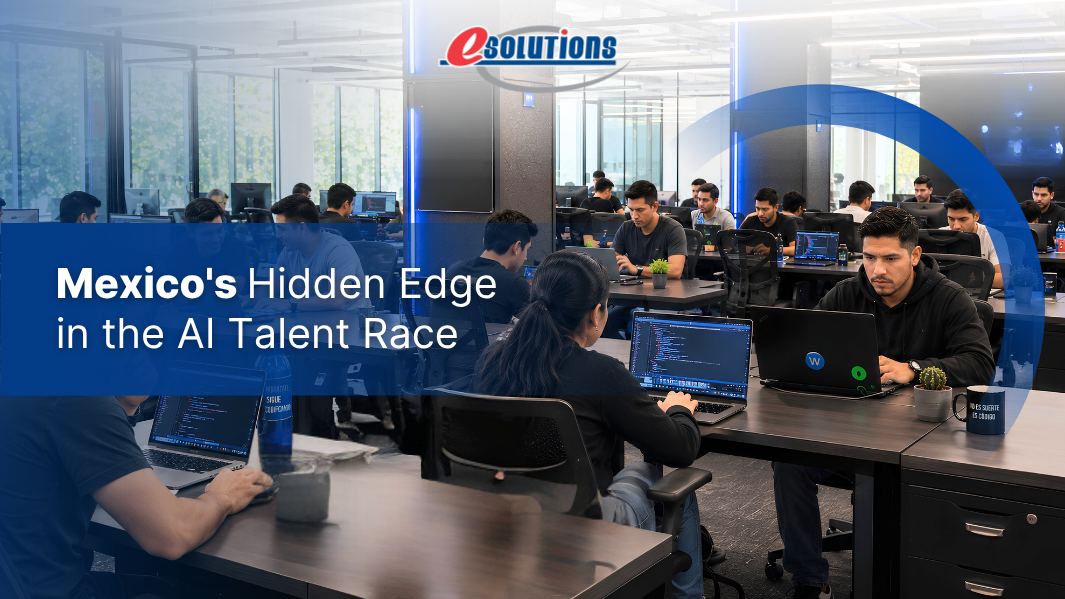
Mexico combines scale with operational readiness. Its proximity to the United States and strong exposure to North American business practices have made it a preferred destination for roles that require frequent interaction with stakeholders. Industry estimates place Mexico’s technology workforce in the range of several hundred thousand professionals, with reported figures varying between 200,000 and 700,000+, depending on role definitions. Mexican professionals are often engaged in AI, cloud, and analytics work where real-time collaboration and business context are critical. From a career standpoint, the location creates opportunities for deeper integration into global teams rather than peripheral execution roles. [Source: Teilur Talent]
Colombia has emerged as a high-quality talent hub known for problem-solving strength and technical rigor. With approximately 150,000 core ICT professionals, and higher estimates when broader technology roles are included, Colombia offers meaningful scale alongside capability depth. Full time-zone overlap with US East Coast teams enables Colombian professionals to benefit from real-time decision-making and increased visibility. This alignment has allowed many roles to evolve beyond delivery into strategic participation, particularly in regulated, data-intensive, and analytics-driven work. [Source: Hire in South]
Costa Rica, while smaller in scale, offers a highly communication-ready workforce with strong English proficiency and cultural alignment. With ICT talent estimates typically cited in the range of 40,000 to 50,000 professionals, Costa Rica focuses on quality and specialization rather than volume. Professionals here often work in high-interaction, product-oriented roles where clarity, collaboration, and consistency are more important than volume. For candidates, this means roles that prioritize ownership, accountability, and long-term engagement over rapid churn. [Source: Mismo]
From an E-Solutions perspective, Latin America represents more than a hiring destination. It is a region where Global Capability Centers (GCCs) and structured workforce models can thrive, offering candidates stability, skill progression, and sustained global exposure rather than transactional gig work.
APAC: Scale, Specialization, and Workforce Transformation
Traditionally known for scale, the APAC region is now moving toward capability-led workforce models that emphasize specialization, upskilling, and long-term talent development. As enterprises face global skill shortages, particularly in AI, data, engineering, and digital operations, the APAC has become central to nearshored workforce strategies.
What differentiates APAC in 2026 is not just the availability of talent but the intentional development of future-ready professionals. Organizations are increasingly investing in structured onboarding, continuous learning, and domain-specific training to ensure talent is aligned with global standards from day one.
This is where E-Solutions’ approach becomes particularly relevant. By leveraging BOOT camps and targeted upskilling programs, we enable professionals in APAC to transition from local roles into globally deployable talent. These programs focus on bridging real-world skill gaps, preparing candidates for nearshored roles that require not just technical expertise but also cross-cultural collaboration and business understanding.
For professionals, nearshoring in APAC increasingly means access to long-term global work without relocation. Careers are shaped through sustained exposure to international teams, evolving responsibilities, and structured growth paths rather than short-term assignments.
Canada: A Strategic Bridge in the Nearshoring Ecosystem
Canada occupies a unique position in the nearshoring landscape, functioning both as a delivery destination and as a strategic talent bridge between global enterprises and distributed teams. With close integration into U.S. markets, strong regulatory alignment, and advanced digital infrastructure, Canada has become a preferred nearshore location for roles that demand trust, governance, and long-term workforce stability. As of 2024, Canada’s core ICT sector employs over 800,000 professionals, reflecting the country’s depth in software engineering, digital services, and enterprise technology roles. [Source: ISED]
For professionals, nearshored roles in Canada often extend beyond execution. Canadian talent is frequently embedded in high-trust responsibilities such as cross-border coordination, product ownership, compliance oversight, and leadership-oriented functions. This is reinforced by the scale of Canada’s broader tech ecosystem, which spans nearly 1.5 million technology professionals across software, data, cloud, AI, and digital operations. As a result, nearshoring in Canada increasingly offers candidates exposure to strategic decision-making and multi-region collaboration rather than isolated delivery work. [Source: CompTIA]
From a workforce solutions standpoint, Canada exemplifies how nearshoring has evolved beyond cost or convenience. It represents a mature model where compliance, quality, and workforce continuity intersect. For E-Solutions, Canada plays a critical role in enabling globally aligned teams that operate under strong regulatory frameworks while maintaining seamless collaboration with distributed nearshore and offshore talent. This makes Canada not just a location, but a stabilizing pillar within E-Solutions’ global workforce strategy.
Nearshoring and the Evolution of Gig Work
The gig economy continues to expand, offering flexibility but often lacking structure and security. Nearshoring introduces a more balanced alternative by enabling flexible engagement models without losing continuity.
At E-Solutions, this balance is achieved through Employer of Record (EOR) and Agent of Record (AOR) frameworks. These models allow professionals to participate in global gig opportunities while benefiting from compliance, payroll stability, and regulatory assurance. Rather than short-lived contracts, professionals gain access to structured engagements that support long-term career development.
In 2026, the most resilient careers will not choose between flexibility and stability. They will integrate both.
How E-Solutions Translates Nearshoring into Careers
E-Solutions operates at the intersection of global workforce strategy and regional talent depth. With delivery capabilities spanning APAC, Latin America, and North America, we support organizations in building nearshored teams that are not only geographically aligned but also operationally immersed in core business functions.
Through its global network, E-Solutions partners with skilled professionals across technology, digital operations, analytics, finance, and emerging skill domains. This scale enables the formation of cross-functional teams that combine technical expertise with domain context, allowing global enterprises to move beyond transactional staffing models toward sustainable workforce ecosystems.
E-Solutions’ experience across various industries, including technology services, healthcare, BFSI, and enterprise operations, has enabled the successful setup and management of Global Capability Centers (GCCs) and nearshored delivery teams designed for long-term impact. These engagements emphasize continuity, knowledge retention, and career progression - key factors that increasingly matter to professionals navigating global roles in 2026.
A defining strength of E-Solutions lies in its structured workforce frameworks. From GCC design and BOOT camp-led upskilling programs to compliant Employer of Record (EOR) and Agent of Record (AOR) models, we allow organizations to engage talent across borders while maintaining regulatory compliance, operational clarity, and workforce stability. These frameworks support seamless collaboration between distributed teams and internal stakeholders, reinforcing accountability rather than fragmentation.
Security, governance, and compliance are inherent in our operating model. The company aligns its workforce solutions with internationally recognized standards and data protection practices, ensuring confidentiality, integrity, and regulatory adherence across regions. This foundation allows both enterprises and professionals to operate with confidence in increasingly complex global environments.
Above all, E-Solutions positions nearshoring not simply as a delivery strategy but as a career-shaping model. By authorizing access to global exposure, structured growth pathways, and stable engagement models, E-Solutions helps professionals build careers that are globally relevant, locally grounded, and future-ready.
In a world where talent mobility is redefining how work gets done, E-Solutions remains focused on one core objective: connecting people to meaningful global opportunities - responsibly, sustainably, and at scale.
Frequently Asked Questions
Why is Latin America emerging so strongly in nearshoring today?
Latin America offers a rare combination of time-zone alignment with North America, mature delivery ecosystems, and concentrated talent hubs. Cities such as São Paulo, Mexico City, Bogotá, Medellín, and San José have evolved into established global delivery centers, allowing professionals to work on long-term international programs rather than short-term outsourced tasks. For candidates, this means continuity, visibility, and deeper integration into global teams.
Does nearshoring limit career opportunities compared to offshore models?
Not anymore. Nearshoring has shifted toward high-value, capability-driven roles, including product engineering, cloud, data, AI, cybersecurity, and enterprise transformation. Professionals in nearshore hubs are often embedded directly into client teams, gaining greater ownership, career stability, and progression compared to traditional offshore or task-based models.
Is nearshoring mainly about cost savings for companies?
Cost is no longer the primary driver. Organizations choose nearshoring to improve speed, accountability, communication quality, and delivery reliability. For professionals, this results in roles that are strategic, visible, and growth-oriented, rather than transactional or short-lived engagements.
How does nearshoring compare to gig work for long-term careers?
Gig work offers flexibility but often lacks structure and continuity. Nearshoring blends flexibility with stability, especially when supported by structured workforce models. Professionals gain global exposure while benefiting from clear engagement frameworks, compliance, and long-term career paths, making nearshoring a more sustainable option for future-ready careers.
How does E-Solutions support professionals in nearshored global roles?
E-Solutions focuses on building structured, long-term nearshoring engagements rather than short-term placements. Through Global Capability Centers (GCCs), compliant workforce models, and regionally aligned delivery teams, professionals are embedded directly into global programs with clear responsibilities, consistent collaboration, and defined growth paths. This approach allows talent to gain meaningful global exposure, role continuity, and skill progression while working from their home region.
What makes nearshoring at E-Solutions different from traditional staffing or gig platforms?
Nearshoring at E-Solutions is designed around career sustainability, not transactional hiring. By combining Employer of Record (EOR) and Agent of Record (AOR) frameworks with structured onboarding, governance, and compliance, E-Solutions enables professionals to participate in global work with stability, regulatory assurance, and long-term engagement. The result is a model where flexibility and global opportunity coexist with clarity, security, and professional growth.
Works Cited
- CompTIA. 2024. State of the Tech Workforce 2024. Downers Grove, IL: CompTIA.
- Hire in South. 2024. Colombia Tech Talent Market Overview. Bogotá: Hire in South.
- Innovation, Science and Economic Development Canada (ISED). 2024. Canada’s ICT Sector Profile. Ottawa: Government of Canada.
- International Data Corporation (IDC). 2025. Worldwide Services and Nearshore Market Forecast, 2025–2027. Framingham, MA: IDC.
- Mismo. 2024. Costa Rica Tech Talent and Nearshoring Landscape Report. San José: Mismo.
- Teilur Talent. 2024. Brazil and Mexico Tech Talent Market Insights. São Paulo: Teilur Talent.
- Team International. 2024. Latin America Technology Talent Statistics Report. Fort Lauderdale, FL: Team International.

 Facebook
 Twitter (X)
 WhatsApp
 LinkedIn
 Copy Link (Insta/Medium)

.png)